




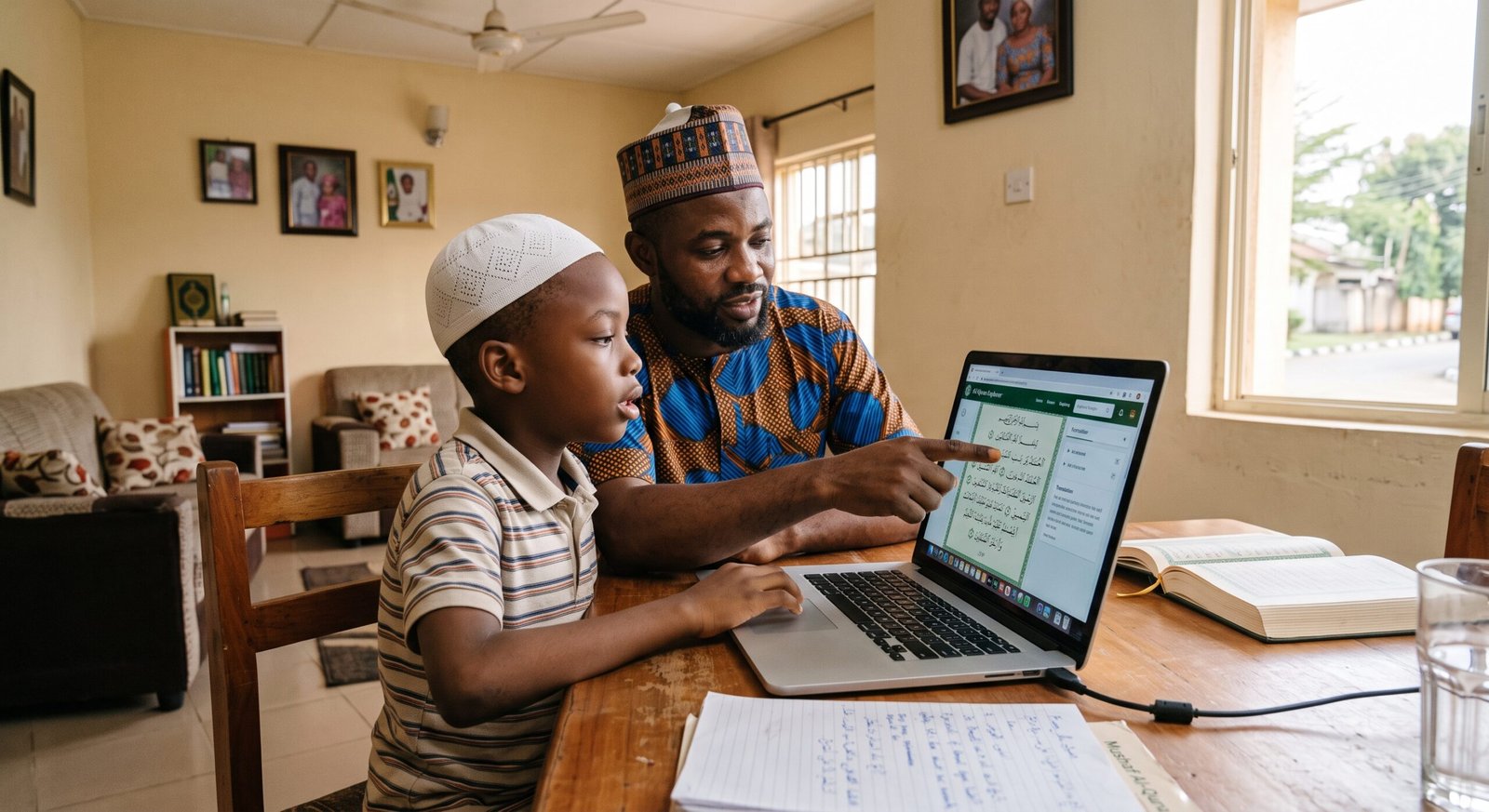
What should good Arabic classes for kids actually look like?
For many Muslim parents, Arabic is more than another language to add to a child’s education.
It can help children connect with the Quran, understand words they hear in Salah, communicate with Arabic-speaking family members, and develop a deeper connection with Islamic learning.
But enrolling a child in Arabic lessons does not automatically mean they will learn to use Arabic.
Learn Trades
The teacher, curriculum, pace, lesson format, and learning goals all matter.
Before choosing an Arabic program for your child, here are the most important things to look for.
First: What Do You Want Your Child to Learn?
Before comparing programs, define the goal.
When parents say:
“I want my child to learn Arabic,”
They may mean very different things.
Perhaps you want your child to:
- Recognize Arabic letters
- Read Arabic confidently
- understand basic vocabulary
- speak and respond in Arabic
- write in Arabic
- understand more of the Quran
- communicate with Arabic-speaking relatives
- Build a foundation for future Islamic studies
Those goals are related, but they are not identical.
Hire Babysitters
A child can learn to pronounce written Arabic without understanding the sentence.
Another child might understand Arabic spoken at home but struggle to read it.
Another may recognize Quranic vocabulary but be unable to hold a simple conversation.
That’s why the first sign of a strong Arabic program is simple:
It understands where your child is starting and where they need to go.
1. Look for a Program That Assesses Your Child’s Actual Level
Age alone does not determine Arabic ability.
Two eight-year-olds may have completely different starting points.
One might speak Arabic with family but never have learned to read.
Another may already recognize Arabic letters through Quran lessons but understand very little vocabulary.
Get Parenting Tips
A third may be encountering Arabic for the first time.
Putting all three children into exactly the same beginner curriculum may not serve any of them particularly well.
Good Arabic classes for kids should identify what the child can already do before deciding what they should learn next.
An evaluation can look at areas such as:
- letter recognition
- pronunciation
- reading ability
- vocabulary
- listening comprehension
- speaking ability
- writing
- previous Arabic exposure
This creates a much clearer starting point.
At IQRA Network, students begin with an evaluation so their learning can start at an appropriate level rather than simply being based on age.
2. Look Beyond Memorizing the Arabic Alphabet
Learning the Arabic alphabet is important.
Enroll in Classes
But it is only the beginning.
A child may be able to recite:
ا، ب، ت، ث…
without being able to recognize those letters naturally inside words.
Similarly, a child may memorize lists of Arabic vocabulary without knowing how to use those words in a sentence.
Effective Arabic learning should gradually help children move from:
letters → sounds → words → sentences → understanding and communication.
For beginners, that may start very simply.
Instead of only memorizing that بيت means “house,” children can gradually learn to recognize it, pronounce it, understand it when they hear it, and eventually use it in context.
The goal isn’t simply:
“My child knows Arabic words.”
Learn a Language
It is:
“My child is beginning to understand and use Arabic.”
3. Make Sure the Program Develops More Than One Language Skill
Language learning has several connected skills.
A well-rounded Arabic program should gradually develop:
Reading
Can your child recognize letters, connect them correctly, and read words and sentences?
Listening
Can your child understand Arabic when someone speaks?
Speaking
Can they respond rather than only repeat after the teacher?
Read Bestsellers
Writing
Can they form letters and eventually write words and sentences?
Vocabulary
Are they building a useful bank of words they actually understand?
A child’s level may not be equal across all five.
For example, children growing up in an Arabic-speaking family may understand conversations very well while struggling to read.
A non-Arabic-speaking child may have the opposite experience: they can decode Arabic letters because of Quran lessons but understand very little of what they read.
That difference matters.
The learning plan should respond to the child’s actual strengths and gaps.
4. Look for Teachers Who Know How to Teach Children
Knowing Arabic and teaching Arabic to a child are two different skills.
Find Prayer Mats
Children need more than correct information.
They need someone who knows how to:
- explain concepts simply
- recognize when they are confused
- keep them involved
- encourage them to speak
- correct mistakes without making them afraid to try
- adapt to different attention spans
- build confidence gradually
This becomes particularly important with online Arabic classes for kids.
A teacher cannot simply talk for 45 minutes and expect a young learner to remain engaged.
Children need interaction.
Questions.
Repetition.
Visuals.
Conversation.
Practice.
And opportunities to participate rather than simply listen.
Hire Babysitters
Before choosing a program, don’t only ask:
“Is the teacher qualified?”
Also ask:
“Does this teacher know how to teach children?”
5. Consider Whether One-on-One Learning Would Help Your Child
Group classes can work well for some children.
But they also create a challenge:
Every child must move at roughly the same pace.
Imagine five children in the same Arabic class.
One already knows the alphabet.
One struggles with letter sounds.
Learn Trades
One is shy about speaking.
Another finishes every activity quickly.
And another needs concepts repeated several times.
A single lesson has to accommodate all of them.
With one-on-one Arabic classes, the teacher can spend the lesson responding to one child’s needs.
If your child needs extra reading practice, the teacher can slow down.
If reading is already strong but speaking is weak, more lesson time can go toward conversation.
If a concept is mastered quickly, they can move forward.
At IQRA Network, classes are one-on-one, allowing the learning experience to follow the student’s level and progress rather than the pace of a group.
6. Ask Whether Your Child Is Actually Using Arabic During the Lesson
This is an easy detail to overlook.
Success stories分享
Watch what happens during a class.
Who is doing most of the talking?
If the teacher explains Arabic for most of the session while the child occasionally repeats a word, the child may be learning about Arabic more than learning to use it.
Children need opportunities to participate.
Depending on their level, that might mean:
- answering simple questions
- identifying objects
- repeating new sounds
- forming short sentences
- responding to instructions
- reading aloud
- describing pictures
- practicing short conversations
Beginners will naturally need support.
Enroll in Classes
But as their ability develops, they should gradually become active users of the language rather than passive observers.
7. Look for a Clear Learning Path
Ask a simple question before enrolling:
“If my child starts here, what comes next?”
A strong program should have an answer.
For example, a beginner’s progression might move through:
Arabic letters and sounds
↓
connecting letters
↓
reading simple words
↓
basic vocabulary
↓
simple sentences
↓
reading comprehension
↓
speaking and writing development
Learn a Language
The exact structure varies by program.
What matters is that there is a structure.
Random worksheets, disconnected vocabulary lists, and constantly changing activities can make children appear busy without creating steady progress.
Parents should be able to understand what their child is working toward.
8. Choose a Routine Your Family Can Actually Maintain
The best Arabic curriculum will not help much if attending class becomes impossible after three weeks.
Think about your real family schedule.
School.
Homework.
Sports.
Quran classes.
Read Bestsellers
Dinner.
Bedtime.
Weekends.
This is particularly important during the school year.
You don’t necessarily need to fit Arabic into every available space.
You need a schedule that can remain consistent.
The Prophet ﷺ taught us:
“The most beloved deeds to Allah are those that are most consistent, even if they are small.”
— Sahih al-Bukhari and Sahih Muslim
For many families, online Arabic classes for kids make consistency easier because children can learn from home without adding travel time to an already busy week.
Choose a frequency that works for your child and build from there.
Hire Babysitters
9. Don’t Ignore Your Child’s Confidence
Progress isn’t only measured by the number of lessons completed.
Watch your child.
Are they becoming more willing to try?
Do they recognize words they didn’t recognize before?
Do they attempt Arabic without immediately worrying about mistakes?
Can they answer their teacher more independently?
Do they notice Arabic words around them?
These small changes matter.
Language learning requires children to make mistakes repeatedly.
If they become afraid of being wrong, they may stop participating.
Learn Trades
A good teacher corrects mistakes while preserving the child’s willingness to try again.
That confidence becomes part of the foundation for future learning.
10. Ask How Progress Will Be Measured
“We’ve completed 20 lessons.”
That’s not necessarily the same as:
“My child has progressed.”
Parents should have some way to understand what is changing.
For example:
Can your child now recognize all Arabic letters?
Can they connect letters?
Can they read simple words?
Get Parenting Tips
Has their vocabulary expanded?
Can they answer basic questions?
Can they understand simple instructions?
Can they form a short sentence?
Specific learning outcomes are much more useful than simply counting classes.
Arabic Classes and Quran Classes Aren’t Exactly the Same
This distinction is especially important for Muslim families.
A child can learn to read Quranic Arabic correctly without being able to speak or understand Arabic as a language.
Likewise, a child studying conversational Arabic may still need separate instruction in Quran recitation and Tajweed.
The two areas support each other, but their goals are different.
Quran instruction may focus on:
Learn a Language
- correct recitation
- pronunciation
- Tajweed
- memorization
- revision
Arabic language instruction may focus more broadly on:
- vocabulary
- reading comprehension
- listening
- speaking
- writing
- grammar
For families who want both, the important thing is to understand which skill each program is developing.